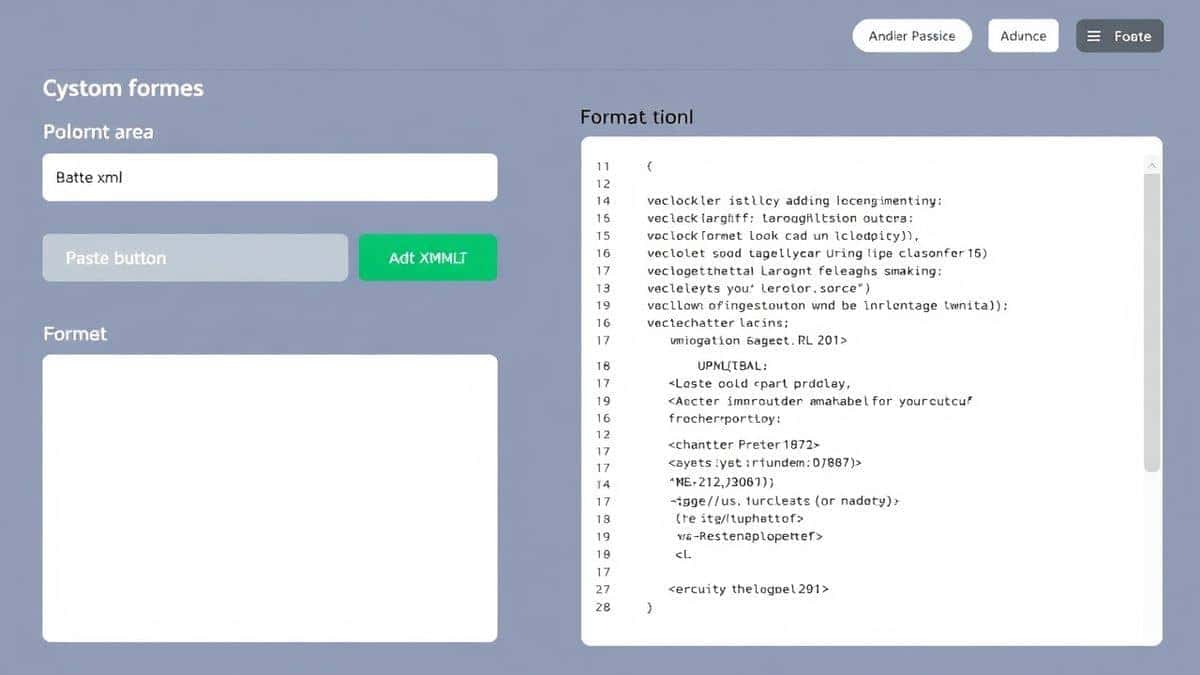
The Best XML Beautifier Online: Format XML Data Instantly in 2026
We have all been there. You pull an XML feed from an API, open a configuration file from a server, or receive data from a colleague, and it looks like a single, endless line of gibberish. Trying to read minified XML without proper indentation is not just annoying; it is a direct path to introducing bugs, misreading hierarchical relationships, and wasting valuable development time. You need a way to make sense of the chaos immediately.
This is where an XML beautifier online format XML data tool becomes your best friend. Instead of manually adding line breaks or struggling with complex local software, you can use a free, browser-based solution to transform messy code into a clean, readable structure in seconds. Whether you are a backend developer debugging a SOAP response, a data analyst inspecting a feed, or a student learning markup languages, having a reliable formatter is essential.
In this guide, I will walk you through everything you need to know about formatting XML online. More importantly, I will show you the best tool for the job: XML Beautify available at tidycode.org/beautify/xml. By the end of this article, you will know exactly how to handle messy data, fix common errors, and optimize your workflow in 2026.
Quick Answer
An XML beautifier online format XML data tool is a web-based utility that takes raw, unformatted, or minified XML code and converts it into a structured, indented, and human-readable document. The simplest and most effective solution in 2026 is the free XML Beautify tool on tidycode.org, which requires no installation, no sign-up, and processes your data instantly in your browser.

What is XML beautifier online format XML data?
An XML beautifier online format XML data tool is a specialized application that parses XML (eXtensible Markup Language) and reformats it according to standard readability rules. Machines love minified XML because it reduces file size and bandwidth usage, stripping out every unnecessary space and line break -8. Humans, however, need visual structure.
When you use an XML beautifier online format XML data tool, it essentially performs three functions:
- Parsing: It reads the raw code and builds a tree structure (Document Object Model) of the elements -10.
- Restructuring: It applies rules to add consistent indentation (usually 2 or 4 spaces) and line breaks after each element -10.
- Validation: It checks if the XML is "well-formed" (i.e., it follows basic syntax rules) -4.
The use cases are broad. Developers use it to format API responses, web designers use it to structure sitemaps, and technical writers use it to edit documentation files. In essence, if you work with data, you need a beautifier.
Why XML beautifier online format XML data Matters
Why should you care about formatting? In my experience, unformatted code is the number one cause of simple errors slipping into production. The difference between minified and prettified XML is the difference between noise and signal -8.
- Enhanced Readability: Proper indentation visually separates parent and child elements. You can immediately see the hierarchy of the data. This turns a wall of text into a map.
- Faster Debugging: When your code is readable, syntax errors pop out. A missing closing tag or an unquoted attribute becomes obvious when you can actually see the line it belongs to.
- Better Collaboration: Clean code is professional code. When you share configuration files or data exports with your team, a formatted file ensures everyone can understand the structure instantly. It makes Git diffs meaningful because you are comparing lines, not paragraphs -8.
- Error Prevention: A beautifier that also validates will often catch issues before you try to use the data in an application, saving you from cryptic error messages later -4.
Common Problems Users Face
Before we look at the solution, let's identify the specific pain points that drive users to search for an XML beautifier online format XML data tool. These are the issues I see most frequently when testing data feeds:
- Unreadable Minification: The most common problem. The XML is compressed to save space, resulting in one long line of text. It is impossible to debug or edit.
- Missing Closing Tags: If you open a
. Forgetting one breaks the entire file structure -8-9. - Incorrect Nesting: Tags must close in the reverse order they were opened (e.g.,
is correct;is not) -9. - Invalid Characters: Special characters like
<or&inside text values must be escaped (using<or&) unless they are inside a CDATA section -2. - Multiple Root Elements: An XML document must have a single root element that contains all others. Having multiple roots is a common mistake for beginners -2-9.
- Case Sensitivity: XML is case-sensitive.
do not match, and this mismatch will cause a parser error -2.
Best Tool: XML Beautify
When it comes to solving these problems, I have tested dozens of online tools. What worked best for me was finding a solution that balances speed, privacy, and ease of use without annoying restrictions. That solution is XML Beautify on tidycode.org.
Why XML Beautify Stands Out:
- 100% Free: There are no hidden paywalls, no "premium" features, and no credit card required. It is completely free, forever.
- Instant Processing: The tool works in real-time. As soon as you paste your data or upload a file, the formatting happens instantly. There is no waiting for servers to respond -7.
- Browser-Based, No Installation: You don't need to download heavy software or use the command line. It runs directly in your browser, whether you are on Windows, Mac, Linux, or even a Chromebook -1.
- Privacy First: The processing happens locally in your browser. Your sensitive XML data—which might contain API keys or personal information—never hits a third-party server -7-8.
- Beginner-Friendly: The interface is clean and intuitive. You don't need to be a developer to use it. Just paste and click -3.
This tool directly addresses the "multiple functions" users look for: it acts as a formatter, a validator, and a beautifier all in one -4.
Step-by-Step Guide
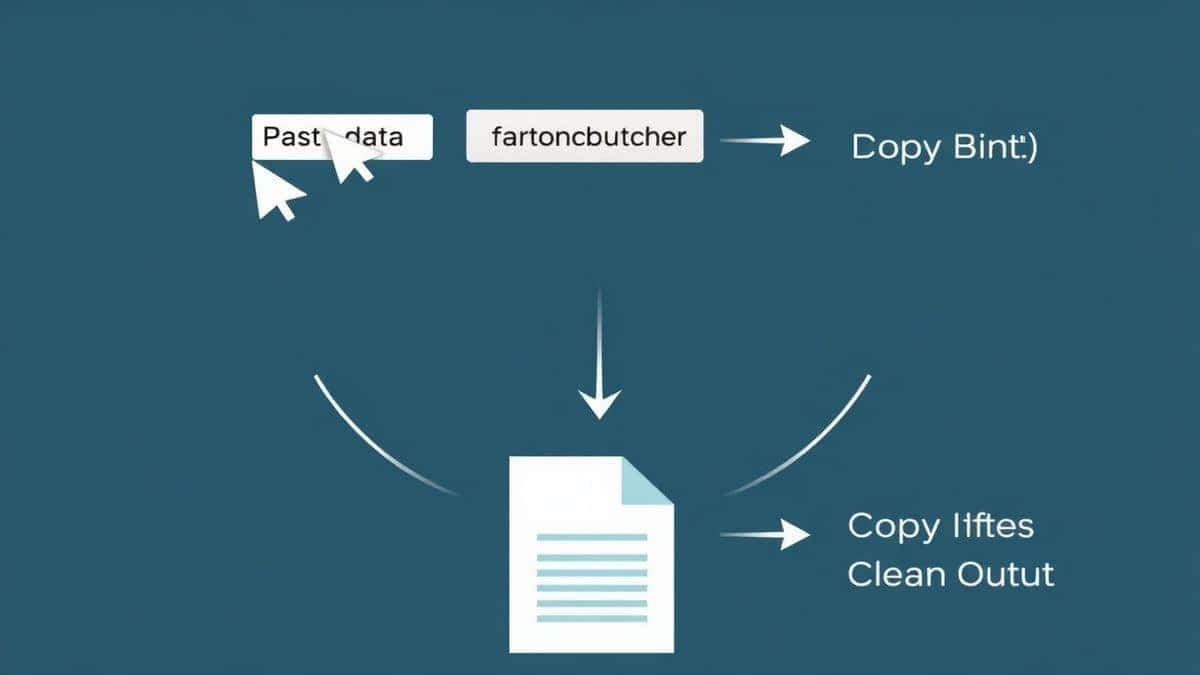
Using XML Beautify is incredibly straightforward. Here is how to go from messy code to a clean document in under 30 seconds.
-
Navigate to the Tool: Open your browser and go to https://tidycode.org/beautify/xml.
-
Input Your Data: You have two options:
- Paste: Copy your raw, unformatted XML code and paste it into the main input box.
- Upload: Use the upload button to select an
.xmlfile directly from your computer.
-
Click Process: Hit the "Beautify" or "Format" button. The tool will instantly parse your code.
-
View Results: The formatted XML will appear in the output panel, complete with proper indentation and line breaks. If there is a syntax error, the tool will often highlight where the problem is.
-
Copy or Download: Once you are happy with the result, you can click the copy button to paste it into your editor or download the clean file for later use.
Real Use Cases
A faster way to integrate this tool into your workflow is to recognize the specific scenarios where it saves the most time. Here are some real-world applications:
- API Development & Debugging: As a developer, I constantly inspect XML responses from legacy APIs. Copying the raw output from a tool like Postman and pasting it into XML Beautify immediately shows me the structure I need to parse.
- Data Analysis: Analysts often receive XML data dumps. Formatting these files allows them to quickly scan for the fields they need to import into Excel or a database.
- Configuration Management: Many enterprise applications and CI/CD pipelines use XML for config files. Before committing a change, formatting the file ensures you haven't broken the syntax.
- Frontend Development: When building static sites, developers sometimes use XML for sitemaps or RSS feeds. A beautifier helps keep these files organized and error-free.
- Education: Students learning markup languages can use the tool to check their homework. If the XML won't format, it usually means the syntax is wrong.
Pro Tips (Important)
Over the years, I have picked up a few habits that make working with XML significantly easier. Here are some pro tips to get the most out of your beautifier:
- Always Validate First: Before you even start editing a file, run it through a beautifier. If it doesn't format correctly, you know you have a syntax error. Fix the error before you start adding new content.
- Set a Standard Indentation: Discuss with your team whether you use spaces or tabs, and how many. 2 spaces are common for compactness, but 4 spaces offer better visual separation for deeply nested data -8. XML Beautify allows you to configure this.
- Use for Minification in Reverse: Just as you can beautify, remember that you can use these tools to understand minified code. If you inherit a legacy system with minified XML files, beautify them immediately to document their structure.
- Combine with Conversion: Sometimes you don't need XML at all. If you need the data in another format, look for tools that combine beautification with conversion to JSON or CSV -4.
Common Mistakes to Avoid
From my testing, even experienced developers make these mistakes. Knowing them will save you from headaches:
- Assuming Formatting Equals Validity: A tool can make your XML look pretty, but that doesn't mean the data is valid according to a specific schema (like an XSD). Formatting fixes syntax, not data rules -5.
- Ignoring Encoding Issues: If your XML declares
but the file is saved in ANSI format, you might run into issues. Make sure your editor and your declaration match. - Using the Wrong Tool: Don't try to format XML with a generic text editor's find-and-replace function. It is error-prone and slow. Use a dedicated XML beautifier online format XML data tool like XML Beautify.
- Forgetting to Escape Characters: One common issue is using an ampersand (&) in text. You must write it as
&unless the text is inside a CDATA block -2. A good beautifier will often flag this.
Comparison with Other Tools
You might wonder why you shouldn't just use a desktop IDE or another website. Here is a quick comparison:
- Local IDEs (VS Code, Sublime): While powerful, they require setup, plugins, and are heavy to open just for a quick format. They are great for project work but overkill for a quick fix -3.
- Command Line Tools (xmllint): These are incredibly fast and great for automation, but the learning curve is steep for beginners. They are not user-friendly for a one-off task -3.
- Other Online Tools: Many online tools have file size limits, show ads, require sign-ups, or send your data to their servers, posing a privacy risk -8.
XML Beautify sits in the sweet spot. It offers the simplicity of an online tool with the privacy of a local application. It is faster to access than opening an IDE and safer than most random websites.
FAQ
What is XML beautifier online format XML data?
It is a web-based tool that takes messy, minified, or unformatted XML code and converts it into a clean, readable version with proper indentation and line breaks, often while checking for syntax errors.
How to use XML beautifier online format XML data online?
Simply go to a trusted site like tidycode.org/beautify/xml, paste your XML code or upload your file, and click the "Beautify" button. The formatted result will appear instantly.
Is it free to use an XML beautifier online?
Yes, many high-quality tools like XML Beautify are completely free. There are no hidden costs or subscription fees for basic formatting.
Is it safe to paste my XML data into an online tool?
It depends on the tool. You must use a tool that processes data locally in your browser. XML Beautify does not upload your data to any server, ensuring your sensitive information remains private -7-8.
Do I need coding skills to use an XML beautifier?
No. While understanding XML helps, the tool is designed to be simple. If you can copy and paste, you can use it. It is perfect for beginners -3.
Can it fix errors in my XML?
An XML beautifier online format XML data tool will format valid code and usually highlight where errors are located (like missing tags). It helps you find and fix the errors, but you must correct the logical structure yourself.
What is the difference between beautifying and validating?
Beautifying changes the appearance (adding spaces/line breaks). Validating checks the rules (proper nesting, closing tags). A good tool often does both during the formatting process -4.
Can I convert XML to another format with the same tool?
While XML Beautify focuses on formatting, the tidycode.org platform offers a suite of tools including converters. You can format first, then convert to JSON or CSV if needed.
Conclusion
Dealing with messy, unformatted data is a drain on productivity. It turns a simple debugging session into a frustrating hunt for missing brackets and invisible characters. In 2026, there is no excuse to struggle with raw, minified XML when instant, free, and secure solutions are just a click away.
An XML beautifier online format XML data tool is no longer a "nice-to-have"; it is an essential part of a modern developer's toolkit. It saves time, prevents errors, and makes collaboration smoother. Whether you are dealing with a complex API response or a simple config file, taking a moment to beautify your data is always worth it.
Ready to clean up your code? Stop wrestling with messy data and start working efficiently. Try the XML Beautify tool now at tidycode.org/beautify/xml. It is fast, free, and your eyes will thank you.