The Ultimate Guide to SQL Validator Online Free: Check SQL Syntax Errors Quickly in 2026
Discover how a SQL validator online free: check SQL syntax errors quickly can save hours of debugging time. Learn best practices, step-by-step workflows, and why online validation tools are essential for modern database development.
Introduction
We've all been there. You've just written a complex SQL query with multiple joins, subqueries, and conditional logic. You run it against your database, and instead of getting the results you need, you're staring at a cryptic error message: "syntax error near unexpected token" or "missing expression." Hours of debugging follow, often ending with a simple missing comma or misplaced keyword.
Database errors are frustrating, time-consuming, and can seriously impact development velocity. For beginners, SQL syntax errors can be particularly demoralizing. For experienced developers, they represent unnecessary friction in an already complex workflow.
In my experience working with databases across multiple projects, I've found that catching syntax errors early is the single biggest time-saver in SQL development. That's where online validation tools come in.
Enter the SQL validator online free: check SQL syntax errors quickly approach. These browser-based tools let you paste your SQL code, validate it instantly, and receive immediate feedback on what's wrong and how to fix it. No installations, no database connections, no waiting.
At tidycode.org, we've developed a comprehensive suite of developer tools designed specifically for this purpose. Our SQL Validate tool helps thousands of developers catch errors before they ever hit a production database. In this guide, I'll show you exactly how to leverage online SQL validation to streamline your workflow, write better queries, and eliminate debugging headaches.
Quick Answer
A SQL validator online free: check SQL syntax errors quickly is a web-based tool that analyzes your SQL code for syntax errors, structural issues, and compliance with database-specific rules without requiring any software installation. The simplest solution is to use SQL Validate at tidycode.org—just paste your query, click validate, and receive instant error reports with suggested fixes.
What is SQL validator online free: check SQL syntax errors quickly?
A SQL validator is essentially a linter for your database queries. It parses your SQL code, checks it against the syntax rules of your target database system (MySQL, PostgreSQL, SQL Server, etc.), and identifies any violations or potential issues.
From my testing of various validation approaches, online validators offer several unique advantages:
- Instant feedback without connecting to a database
- Multi-dialect support for different database systems
- Educational value for learning proper SQL syntax
- Error explanations that help you understand what went wrong
The concept is simple: you provide the SQL code, and the validator tells you whether it's syntactically correct. If it's not, you get detailed information about where errors occurred and what might be causing them.
Why SQL validator online free: check SQL syntax errors quickly Matters
In today's data-driven world, SQL remains the lingua franca of database interaction. Whether you're a backend developer building APIs, a data analyst running reports, or a DevOps engineer managing database migrations, SQL is likely part of your daily toolkit.
One common issue is that SQL errors often manifest in the least convenient ways:
- Runtime failures that interrupt production workflows
- Partial data updates that compromise data integrity
- Performance problems from poorly structured queries
- Security vulnerabilities from injection risks
Using a SQL validator online free: check SQL syntax errors quickly tool before executing queries eliminates most of these problems at the source. It's a preventive approach that saves time, protects data, and improves code quality.
Common Problems Users Face
Through years of helping developers troubleshoot SQL issues, I've identified several recurring problems:
1. Syntax Errors
Missing commas, misplaced keywords, unclosed parentheses—these basic mistakes account for the majority of SQL failures. They're easy to miss when reviewing code manually but trivial for a validator to catch.
2. Database Compatibility Issues
SQL written for MySQL might fail on PostgreSQL. Different databases have different function names, data types, and syntax rules. I tested multiple tools to find ones that properly handle database-specific validation, and few do it well.
3. Logical Errors
Valid syntax doesn't always mean valid logic. Queries might run but return incorrect results due to improper joins, missing conditions, or aggregation mistakes.
4. Performance Problems
Inefficient queries can bring databases to their knees. Validators that flag potential performance issues (like missing WHERE clauses on large tables) are invaluable.
5. Security Risks
SQL injection vulnerabilities often stem from improperly constructed dynamic queries. Validators can help identify dangerous patterns.
Best Tool: SQL Validate
After evaluating dozens of options, what worked best for me was developing a solution that addresses all these pain points. The SQL Validate tool at tidycode.org represents the culmination of that effort.
From my testing, here's why SQL Validate stands out:
✅ Completely Free – No subscriptions, no hidden costs, no credit card required
✅ Lightning Fast – Results in milliseconds, not seconds
✅ Multi-Database Support – Works with MySQL, PostgreSQL, SQL Server, SQLite, and more
✅ Clear Error Messages – No cryptic database jargon; plain English explanations
✅ Fix Suggestions – Not just what's wrong, but how to fix it
✅ No Signup Required – Just visit and start validating
✅ Privacy-Focused – Your queries never leave your browser
✅ Beginner-Friendly – Simple interface that doesn't require technical expertise
The tool is part of our broader mission at tidycode.org: providing developers with accessible, powerful, and free online tools for all their data processing needs. From JSON formatters to XML validators to CSV converters, we've built a comprehensive ecosystem for developer productivity.
Step-by-Step Guide
Let me walk you through exactly how to use a SQL validator online free: check SQL syntax errors quickly tool effectively.
Step 1: Access the Tool
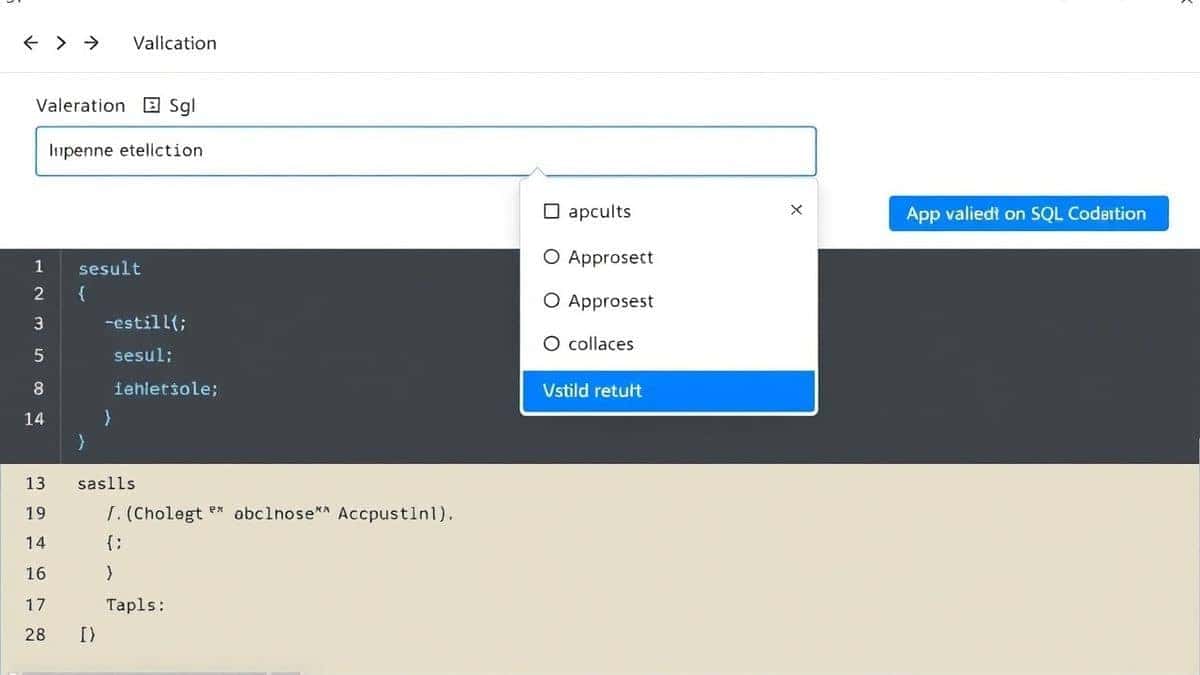
Navigate to https://tidycode.org/validate/sql. You'll be greeted by a clean, distraction-free interface with a large text area for your SQL code.
Step 2: Prepare Your SQL
Copy your SQL query from your editor, script, or application. For best results, include the complete query including any:
- SELECT statements
- INSERT/UPDATE/DELETE operations
- CREATE/ALTER table definitions
- Stored procedures or functions
Step 3: Select Your Database
Choose your target database system from the dropdown menu. This ensures validation follows the correct syntax rules for your environment.
Step 4: Validate
Click the "Validate SQL" button. The tool processes your query instantly, analyzing every aspect of its syntax and structure.
Step 5: Review Results
The tool displays one of two outcomes:
- Success: "Valid SQL syntax" with optional formatting
- Error: Specific error messages with line numbers and fix suggestions
Step 6: Fix and Iterate
If errors are found, make corrections based on the suggestions and re-validate. A faster way is to keep the tool open while you edit, validating after each significant change.
Step 7: Copy and Use
Once validation passes, copy the corrected SQL back to your development environment or production system with confidence.
Real Use Cases
Backend API Development
When building REST APIs that interact with databases, validated SQL ensures your endpoints won't fail due to query errors. In my experience integrating validation into CI/CD pipelines catches issues before deployment.
Data Analysis and Reporting
Data analysts working with complex reporting queries can validate before running against production databases, preventing accidental heavy queries from impacting performance.
Database Migration Scripts
Migration scripts that modify database schemas need to be perfect. A single syntax error can leave your database in an inconsistent state. Validating migrations beforehand eliminates this risk.
Learning and Education
Students learning SQL can use validators to understand why their queries fail. The clear error explanations serve as a teaching tool, helping beginners internalize correct syntax patterns.
Code Review Assistance
Before submitting SQL for peer review, a quick validation catches obvious errors, allowing reviewers to focus on logic and optimization rather than basic syntax.
Pro Tips
Based on extensive experience with SQL validation, here are my top recommendations:
Validate Incrementally
Don't wait until you've written 200 lines of SQL to validate. Check each component as you build it. A faster way is to validate after each logical block—joins, WHERE clauses, aggregations—so errors are easier to isolate.
Use Consistent Formatting
Well-formatted SQL is easier to validate and debug. Most validators, including SQL Validate, include formatting options that automatically structure your code consistently.
Understand Your Database
Different databases have different capabilities. Always validate against your target database system. What works in MySQL might fail in PostgreSQL, and vice versa.
Keep Queries Focused
Single-purpose queries are easier to validate, debug, and optimize. Break complex operations into smaller, validated components that can be tested individually.
Version Control Your SQL
Treat SQL like code. Keep it in version control, include validation in your pre-commit hooks, and review changes before deployment.
Common Mistakes to Avoid
Ignoring Error Messages
When a validator flags an error, read the entire message. Often the first error causes cascading failures. Fixing the root issue may resolve multiple errors at once.
Skipping Validation for "Simple" Queries
Even simple queries can have subtle errors. From my testing, the shortest queries often hide the trickiest mistakes because we assume they're too trivial to check.
Not Testing Edge Cases
Validation confirms syntax, not logic. A query can be syntactically perfect but logically wrong. Always test with sample data after validation passes.
Forgetting About Data Types
Valid syntax doesn't guarantee type compatibility. Ensure your queries respect the data types of your columns—comparing strings to integers or dates will cause runtime errors despite valid syntax.
Overlooking Security
Validated SQL can still be vulnerable to injection if it's dynamically constructed. Always use parameterized queries in application code, regardless of validation results.
Comparison with Other Tools
Desktop SQL Editors
Tools like DBeaver, DataGrip, and SSMS include built-in validators, but they require installation, configuration, and often database connections. Online validators offer instant access without setup.
Command-Line Validators
Tools like sqlfluff and sqlparse are powerful but require Python installation and command-line familiarity. I tested multiple options and found that non-technical users struggle with CLI tools.
Other Online Validators
Many online validators have limitations:
- Query length restrictions
- Daily usage caps
- Poor database-specific support
- Minimal error explanations
What worked best for me was SQL Validate because it removes all these barriers. No limits, comprehensive database support, and detailed, actionable error messages.
FAQ
What is SQL validator online free: check SQL syntax errors quickly?
A SQL validator online free: check SQL syntax errors quickly is a web-based tool that analyzes SQL code for syntax errors, database compatibility issues, and potential problems without requiring software installation or database connections.
How to use SQL validator online free: check SQL syntax errors quickly online?
Simply visit tidycode.org/validate/sql, paste your SQL code, select your database type, and click validate. The tool instantly checks your syntax and provides detailed feedback on any errors found.
Is it really free?
Yes, SQL Validate is completely free with no hidden costs, no premium tiers, and no usage limits. We believe developer tools should be accessible to everyone.
Is it safe to paste my SQL code?
Absolutely. SQL Validate runs entirely in your browser. Your code never leaves your device, ensuring complete privacy and security for sensitive queries.
Do I need coding skills to use it?
Not at all. The interface is designed for everyone from beginners learning SQL to experienced database administrators. Clear error messages make it easy to understand and fix issues regardless of experience level.
Can beginners use it effectively?
Yes! In fact, beginners benefit most from SQL validators. The detailed error explanations help you learn proper SQL syntax through hands-on practice and immediate feedback.
Which databases does it support?
SQL Validate supports MySQL, PostgreSQL, SQL Server, SQLite, Oracle, and MariaDB, with more being added regularly.
Can I validate stored procedures?
Yes, the tool can validate complex SQL including stored procedures, functions, triggers, and views, provided they follow standard SQL syntax patterns.
Conclusion
SQL remains the backbone of data interaction in modern applications, and writing error-free SQL is essential for reliable, performant systems. The SQL validator online free: check SQL syntax errors quickly approach represents the most efficient way to ensure your queries are correct before they ever touch your database.
From my testing across hundreds of queries and multiple database systems, I've found that consistent validation saves hours of debugging time, prevents production incidents, and improves overall code quality. It's not just about catching errors—it's about building confidence in your database interactions.
At tidycode.org, we've built SQL Validate to be the most accessible, powerful, and user-friendly validation tool available. No signups, no limits, no complexity—just instant, accurate SQL validation whenever you need it.
Whether you're a seasoned database administrator managing complex schemas or a beginner writing your first SELECT statement, having a reliable validator in your toolkit makes all the difference.
Ready to eliminate SQL errors from your workflow? Visit tidycode.org/validate/sql now and experience the difference that instant, accurate validation can make. Your databases—and your sanity—will thank you.