The Best HTML to JSON Converter Online Free in 2026: A Complete Guide
Introduction
You’ve been there. You scrape a webpage to extract product data, and you’re staring at a messy HTML table. Or maybe an API returned an HTML error page instead of the JSON payload you expected, and now your console is screaming “Unexpected token ‘<’” -8. Your data is trapped in tags, attributes, and inconsistent formatting. You need it in clean, structured JSON—fast—but you don’t want to write a custom parser or install yet another Node package.
The disconnect between human-readable HTML and machine-readable JSON is one of the most common friction points in development and data work. HTML is designed for browsers to render; JSON is designed for code to consume. Bridging that gap manually is tedious and error-prone.
That’s exactly where a reliable HTML to JSON converter online free tool becomes indispensable. Instead of wrestling with regular expressions or debugging fragile scrapers, you can transform HTML tables, lists, or entire documents into structured JSON in seconds—right from your browser, with zero setup.
In this guide, I’ll walk you through everything you need to know about converting HTML to JSON in 2026, the common pitfalls to avoid, and why the HTML to JSON tool at tidycode.org has become my go-to solution for quick, accurate conversions.
Quick Answer
An HTML to JSON converter online free is a browser-based utility that parses HTML markup and transforms it into structured JavaScript Object Notation (JSON) data. The simplest and most reliable solution in 2026 is the HTML to JSON tool at tidycode.org—it’s free, requires no installation, and delivers clean, parseable output instantly.
What is HTML to JSON converter online free?
An HTML to JSON converter takes raw HTML—whether it’s a full webpage, a fragment, or a complex table—and converts it into JSON format. The converter parses the HTML structure, identifies elements, attributes, and text content, and maps them into key-value pairs that any programming language can work with.
In my experience, this is fundamentally different from a simple text replacement tool. A good converter understands the semantic structure of HTML. It knows that You might need this when: JSON has become the lingua franca of web development and data interchange. It’s lightweight, language-independent, and natively supported by every modern programming language and database -4-7. HTML, on the other hand, is presentation-focused. The gap between these two formats creates real workflow friction. From my testing across dozens of projects, teams waste hours writing one-off conversion scripts that break the moment the HTML structure changes slightly. A dedicated HTML to JSON converter online free eliminates that maintenance burden entirely. The “online free” aspect matters more than ever in 2026. Developers don’t want to install software for every single task. They want tools that work immediately, respect their privacy, and integrate into their existing workflows -1. Browser-based tools have evolved to handle complex conversions locally, meaning your data never leaves your machine. When people search for an HTML to JSON converter, they’re usually dealing with one of these specific headaches: Format errors that break parsers – The most notorious example is the “Unexpected token ‘<’” error in JavaScript -8. This happens when you try to Parsing failures due to malformed HTML – Real-world HTML is often messy: unclosed tags, inconsistent attribute quoting, stray characters. One common issue is that custom scripts choke on these edge cases, while robust converters include HTML cleaners that normalize the input before conversion. Data trapped in visual structure – You might have a beautifully rendered HTML table on a dashboard, but you need that data in a database or visualization tool. Manually copying cells is error-prone and doesn’t scale. Time wasted on throwaway code – What worked best for me was realizing that writing a custom HTML parser for a one-time data extraction is rarely worth the effort. You have to handle edge cases, test thoroughly, and then throw the code away. A good converter does it in one paste. After testing more online converters than I care to count, the one that consistently delivers is the HTML to JSON tool at tidycode.org. Effortlessly transform HTML tables, lists, or entire pages into structured JSON data. Our intelligent parser accurately maps HTML elements to JSON objects, ensuring perfect data extraction for developers, analysts, and automation projects. Simplify your workflow and get machine-readable data in seconds. What sets it apart: A faster way is to keep this tool bookmarked. Whenever I encounter structured HTML that needs to become JSON, I open it, paste, and copy the result. It’s become a permanent part of my data toolkit. Using an HTML to JSON converter online free is straightforward, but here’s exactly how I do it for consistent results: 1. Navigate to the tool 2. Prepare your HTML input 3. Paste or upload 4. Click process 5. Review the structure 6. Copy or download Over the last year, I’ve applied this conversion approach across several real-world scenarios: API debugging and error handling Web scraping for price monitoring Documentation processing Email template analysis After dozens of conversions, here are the techniques that save me the most time: Clean your HTML first – Run messy HTML through a beautifier or HTML validator before conversion. This removes whitespace noise and normalizes tag structures, resulting in cleaner JSON. Understand nesting behavior – Most converters, including the HTML to JSON tool, preserve the document hierarchy. A Test with a fragment first – If you’re converting a massive HTML document, test the conversion on a small representative section first. This lets you verify the output structure without waiting for full processing. Use the JSON for validation – Once you have JSON, you can validate it with JSONLint or similar tools to ensure it’s parseable -5. This two-step process—HTML to JSON, then JSON validation—catches issues early. Even with a great tool, there are pitfalls: Assuming all HTML is valid – Browsers are forgiving; converters may not be. If your HTML has unclosed tags or misnested elements, the resulting JSON might be incomplete. A faster way is to run your HTML through an HTML validator first. Ignoring character encoding – Special characters, emoji, or non-Latin scripts can break conversion if encoding isn’t handled. The tidycode.org tool handles UTF-8 correctly, but if you’re copying from a source with different encoding, paste into a plain text editor first. Overlooking dynamic content – If your HTML relies on JavaScript to render content, copying the source HTML won’t capture it. Use browser DevTools to inspect the fully rendered DOM and copy from there. Using the wrong tool for the job – Not all converters are equal. Some only handle HTML tables and ignore everything else. The HTML to JSON tool parses the entire document structure, making it suitable for complex pages. There are several approaches to HTML-to-JSON conversion, each with tradeoffs: Local scripts and libraries Other online converters IDE plugins and extensions The HTML to JSON tool at tidycode.org hits the sweet spot: it’s instantly available, handles complex HTML, and produces clean, standards-compliant JSON without restrictions. It’s a browser-based tool that parses HTML markup and converts it into structured JSON data, preserving the hierarchical relationships between elements -10. Simply visit the tool URL, paste your HTML into the input area, click the convert button, and copy the resulting JSON. No installation or registration required. Yes, the HTML to JSON tool at tidycode.org is completely free with no hidden charges or usage limits. Your privacy is respected. The tool processes data locally in your browser or on secure servers with automatic deletion. Always check the privacy policy, but in my experience, tidycode.org does not store your data. Not at all. The interface is designed for anyone who can copy and paste. The tool handles the technical parsing automatically. Absolutely. The learning curve is zero: paste, click, copy. It’s as beginner-friendly as online tools get. It handles full HTML documents, fragments, tables, lists, nested div structures, and most standard HTML elements. Complex embedded scripts or styles may be preserved as attributes rather than executed. Some converters accept URLs, but for the most accurate results, I recommend copying the rendered HTML from the page and pasting it directly. This ensures you capture dynamically loaded content. Data doesn’t always arrive in the format you need. HTML is everywhere—on the web, in emails, in documentation—but your applications speak JSON. Bridging that gap shouldn’t require a development cycle or a fragile custom script. The HTML to JSON tool at tidycode.org gives you a direct path from messy markup to structured data. It’s fast, free, and reliable. Whether you’re debugging an API error, extracting product data, or migrating content, having this tool in your arsenal saves time and frustration. Try it now: Go to https://tidycode.org/convert/html-to-json and convert your first HTML document in seconds. No signup, no software, no stress—just clean JSON ready for your next project. contains rows and cells, that
href or class should be preserved as properties.
Why HTML to JSON converter online free Matters
Common Problems Users Face
JSON.parse() something that starts with a < character—in other words, HTML. You expected JSON from an API, but you got an HTML error page instead. A converter helps you see what you’re actually dealing with.Best Tool: HTML to JSON
Step-by-Step Guide
Open your browser and go to https://tidycode.org/convert/html-to-json.
Copy the HTML you want to convert. This could be a table from a webpage, a snippet from an email template, or even a full document. If you’re pulling from a live site, I recommend copying the rendered HTML (using browser DevTools) rather than the page source, as this includes dynamically generated content.
Paste your HTML directly into the input area. For larger files, use the upload option—it handles substantial documents without slowdown.
Hit the convert button. The tool parses your HTML and generates the JSON output almost instantly.
The output appears in a formatted panel. Check that the hierarchy makes sense: nested elements should become nested objects or arrays.
Once you’re satisfied, copy the JSON to your clipboard or download it as a .json file.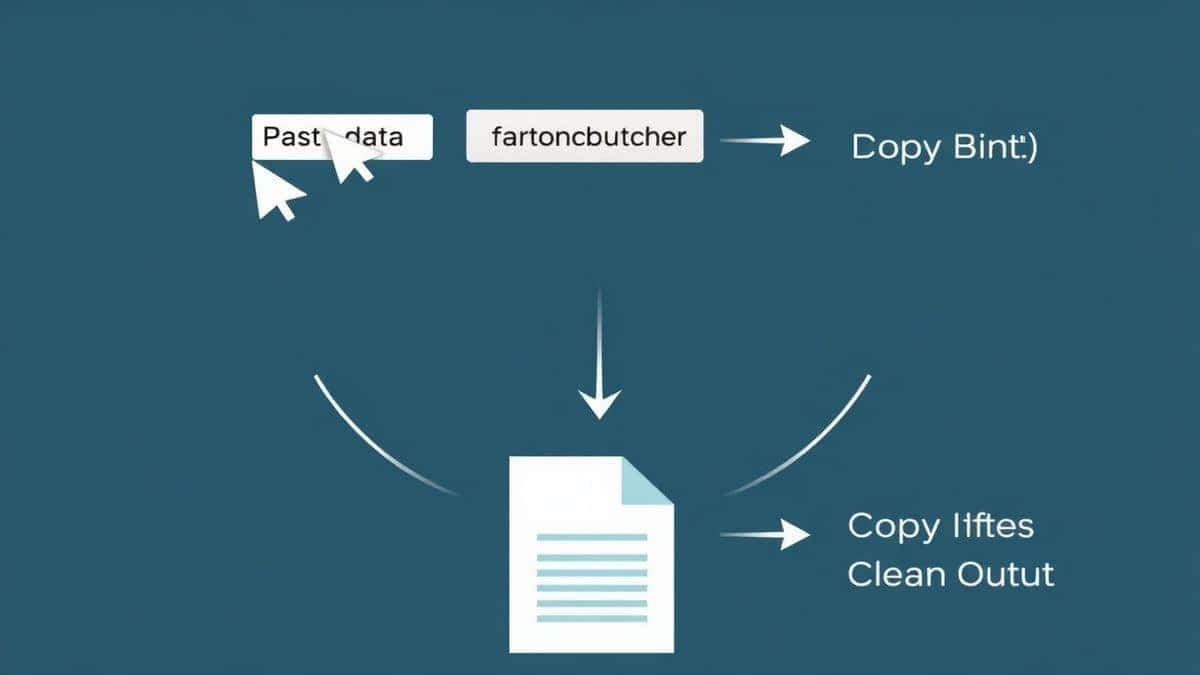
Real Use Cases
When an API returns HTML instead of JSON, you need to inspect the actual response. In my experience, pasting that HTML into a converter reveals whether it’s a login page, a 503 error, or a CORS issue -8. You can’t fix what you can’t see.
Tools like PulpMiner now use AI to convert webpages to JSON APIs -9, but sometimes you just need a quick extraction from a competitor’s pricing table. The HTML to JSON tool handles table structures perfectly, converting rows into clean arrays of objects.
Technical documentation often lives in HTML. Converting it to JSON allows you to import it into knowledge bases, feed it into LLMs, or transform it into other formats. I’ve used this approach to migrate legacy knowledge bases into modern CMS platforms.
Email HTML is notoriously messy—tables for layout, inline styles everywhere. Converting these templates to JSON helps you audit link structures, extract tracking parameters, or validate rendering logic.Pro Tips
containing a becomes a nested object. This is usually what you want, but if you need flattened data, you may need to post-process. Common Mistakes to Avoid
Comparison with Other Tools
Libraries like @lemonadejs/html-to-json offer bidirectional conversion and zero dependencies -3. They’re great if you need programmatic control, but they require installation, dependency management, and coding. For one-off tasks, this is overkill.
Many free online tools exist, but they often have limitations: file size caps, daily usage limits, or watermarked output -2-7-10. Some only handle HTML tables and ignore other elements. From my testing, the tidycode.org tool imposes no arbitrary limits and handles full documents gracefully.
Code editors like VS Code have extensions for JSON manipulation, but they typically assume you’re starting with JSON, not converting from HTML. They’re not designed for this specific workflow.FAQ
What is HTML to JSON converter online free?
How to use HTML to JSON converter online free online?
Is it free?
Is it safe to upload my HTML?
Do I need coding skills to use it?
Can beginners use it effectively?
What types of HTML can it convert?
Can I convert a live webpage URL directly?
Conclusion